Going It Alone: The Real Psychology of Playing Online Casino Games by Yourself
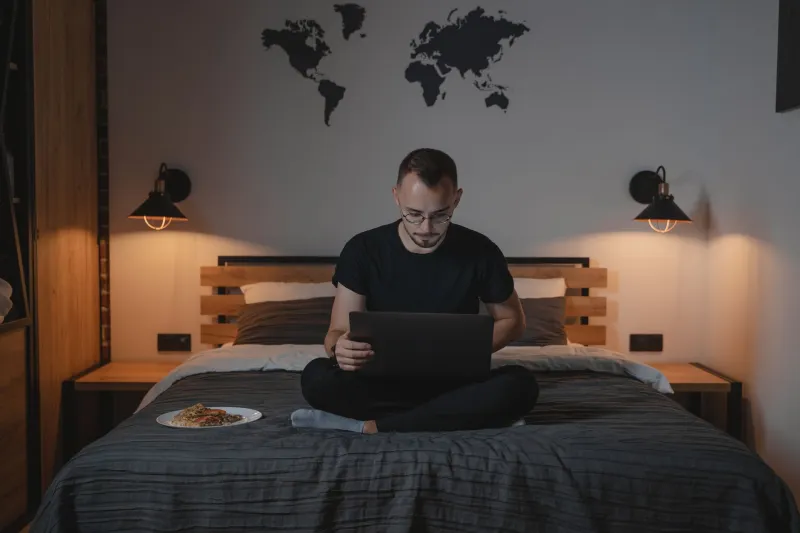
There's an old poker saying: if you can't spot the sucker at the table, it's you. But what happens when there's no table? No crowd, no friends nudging you when you're tilting, no dealer making small talk that gives you a second to breathe? What happens when it's just you, a screen, and a balance that nobody else can see?
For most US online casino players, that's exactly the situation. And the psychology of solo play is genuinely different from anything that happens on a casino floor with other people around. At OnlineListCasino24, we dig into this not to make you feel self-conscious about playing alone — most of us do — but because understanding it is one of the most practical edges you can give yourself.
The Social Guardrails You Leave Behind
Human beings are social animals, and that doesn't stop applying when money is on the line. In fact, it applies more. When you're at a blackjack table with friends, your behavior is being observed. You feel it. Someone raises an eyebrow when you double down in a weird spot. A buddy leans over and says "you sure about that?" You're aware that your decisions are visible, and that awareness acts as a quiet brake on impulsive choices.
Behavioral economists call this "social accountability," and its effect on risk-taking is well-documented. Studies on gambling behavior consistently find that people take larger risks and recover from losses more poorly when they're alone compared to when others are present. The audience — even a friendly, non-judgmental one — keeps the prefrontal cortex more engaged in the decision-making process.
Online casino play strips that entirely. Nobody sees your balance. Nobody knows if you've been playing for three hours. Nobody's going to suggest grabbing dinner and calling it a night. The social friction is gone, and with it goes one of the most natural moderating forces in human behavior.
Isolation and the Loss-Chasing Spiral
One of the clearest ways solo play changes outcomes is through loss chasing — the tendency to increase bets or extend sessions in an attempt to recover losses. Research published in gambling behavior journals has found that players are significantly more likely to chase losses when playing alone versus in social settings.
The mechanism makes intuitive sense. When you're with people, losses feel shared. Someone says "tough luck" and the emotional weight is distributed. When you're alone, the loss sits entirely with you. There's no external perspective to reframe it as just part of the game. The brain, seeking relief from that uncomfortable feeling, reaches for the most immediately available solution: another spin, another hand, another chance to fix it right now.
This is amplified by the same 24/7 availability we talk about elsewhere on this site. A bad session with friends at a physical casino ends when someone suggests leaving. A bad solo session online has no natural endpoint. The chase can go on indefinitely because nothing in the environment says stop.
How Your Risk Tolerance Shifts Without an Audience
It's not just losses that behave differently in isolation. Wins do too. When you hit a big slot payout alone, there's nobody to celebrate with. That sounds minor, but it has real consequences. The social reward of sharing a win — the high-fives, the excitement on someone else's face — is part of what makes gambling fun in a group context. Without it, wins feel flatter. The dopamine hit is there, but the social amplification isn't.
So what does the brain do? It often seeks the next win faster, or at higher stakes, trying to recreate the emotional intensity that the social context would have provided naturally. This is one of the reasons solo players sometimes report feeling strangely unsatisfied even after winning sessions — the experience is missing a component that the brain was wired to expect.
The Anonymity Effect
There's another layer here that's specific to online play: anonymity. At a physical casino, even surrounded by strangers, you have a physical presence. You exist in a social space. People can see you. That visibility matters more than most of us realize.
Online, you're invisible. Your username is a string of characters. Your session history is private. This anonymity can feel freeing, but research on online behavior more broadly — not just gambling — consistently shows that anonymity reduces self-regulation. People behave differently when they believe they're unobserved, and not always in ways that serve their long-term interests.
For casino players, this can manifest as betting amounts you'd feel embarrassed about if a friend were watching, staying logged in well past the point you'd have suggested leaving if someone else were there, or making strategy decisions you'd never defend out loud.
Practical Moves for Solo Players
None of this means playing alone is inherently dangerous or that you should only gamble in groups. That's not realistic and it's not the point. The point is that playing solo requires you to consciously replace the guardrails that a social environment would have provided automatically.
Here's how to do that:
Create an external check-in. Tell a friend or partner you're going to play for an hour and ask them to check in with you when the time's up. You don't need to share your results — just the fact that someone knows you're playing and expects to hear from you creates a version of social accountability.
Narrate your decisions out loud. This sounds strange, but it works. Explaining your bet sizing and reasoning as if you're talking to someone else engages the same rational processing that social observation triggers. "I'm going to drop back to $1 bets because I'm down and I don't want to chase" — saying it out loud makes it real in a way that thinking it quietly doesn't.
Set a loss limit that a friend would respect. Before you start, ask yourself: if my best friend knew I was about to lose this much, would they be okay with it? If the number feels like something you'd hide, it's probably too high.
Keep a session log. Isolation makes it easy to lose track of time and money. A simple note — start time, starting balance, end time, ending balance — creates the kind of external record that breaks through the timeless bubble of solo online play.
Playing Alone Doesn't Have to Mean Playing Blind
The solitary nature of online casino gaming is a feature for a lot of players. No pressure, no crowds, no noise. You can play at your own pace, on your own schedule, in your own space. That's genuinely great. But great things require awareness, not just enjoyment.
Knowing that your brain operates differently when nobody's watching isn't a weakness — it's information. Use it.