No Off Switch: How Always-On Casinos Exploit the Brain's Hardest Weakness

Imagine walking past a casino at 3 a.m. and seeing the doors locked. You'd shrug, go home, and maybe think about it again tomorrow. That brief interruption — that tiny speed bump between impulse and action — turns out to be one of the most powerful behavioral guardrails that brick-and-mortar gambling ever offered. And online casinos have quietly eliminated it entirely.
Here at OnlineListCasino24, we spend a lot of time helping US players find the best platforms, the sharpest bonuses, and the smartest strategies. But part of that mission means being straight with you about the mechanics at play when you fire up a casino app at midnight on a Tuesday. This isn't a scare piece. It's a real look at what perpetual access does to the human brain — and how you can stay in the driver's seat.
The Brick-and-Mortar Brake Pedal You Never Noticed
Traditional casinos in Las Vegas or Atlantic City operate under a kind of forced rhythm. You drive there. You park. You walk the floor. Eventually, you get tired, the shuttle back to your hotel stops running, or the buffet closes and something snaps you out of the zone. These aren't just inconveniences — they're natural circuit breakers that interrupt the feedback loop between desire and action.
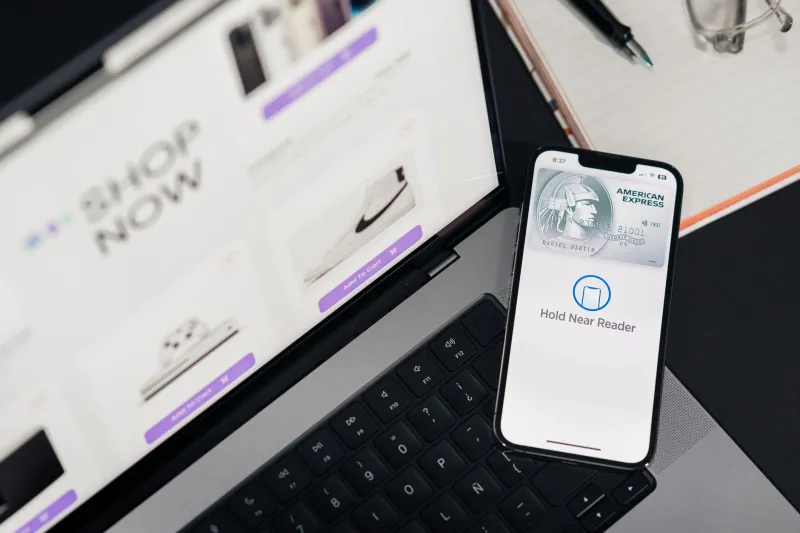
Online casinos don't have any of that. Your phone is already in your hand. The app opens in two seconds. There's no commute, no dress code, no closing time. What looks like pure convenience is also the removal of every natural pause point the gambling environment used to provide.
Researchers who study behavioral addiction call this concept "friction." The more friction between a person and a behavior, the less likely that behavior is to become compulsive. Strip away friction entirely, and you've created something neurologically very different from a Saturday night trip to a casino floor.
What "Available Anytime" Does to Your Decision-Making
Here's where the neuroscience gets interesting. The human brain doesn't process "I can play anytime" the same way it processes "the casino opens at 10 a.m." When something is always available, the prefrontal cortex — the part of your brain responsible for planning and impulse control — essentially stops building a decision around it. It stops being a choice and starts being a default.
This is the same mechanism that makes it harder to stop scrolling social media than to stop watching a TV show. TV shows have credits. They end. Social media just... continues. Online casinos are structured the same way. There's always another spin, another hand, another table opening up. The experience is engineered to feel like it's in mid-sentence, never at a period.
Dopamine plays its usual role here, but the 24/7 structure amplifies the effect. When wins and near-misses can happen at any hour, your brain's reward circuitry doesn't get the downtime it needs to recalibrate. The baseline for excitement creeps upward, and the sessions that once felt satisfying start to feel like they need to go longer, or bigger, to hit the same emotional note.
The "Just One More" Hour You Didn't Plan For
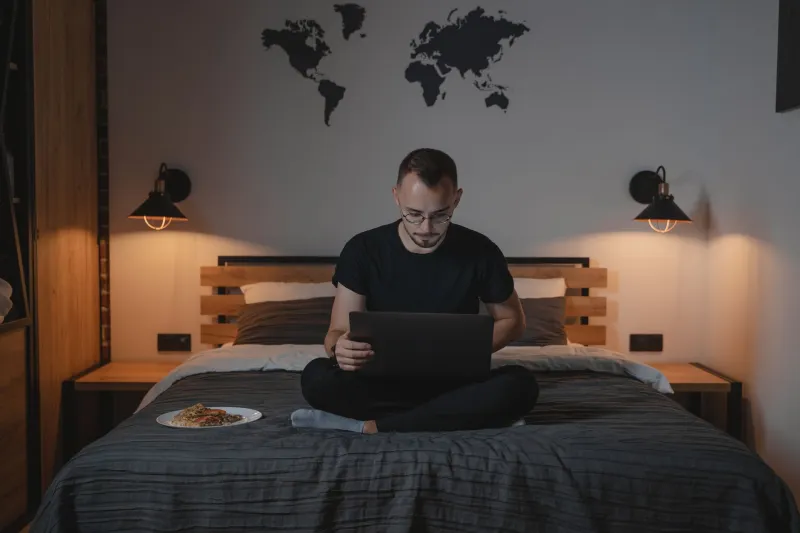
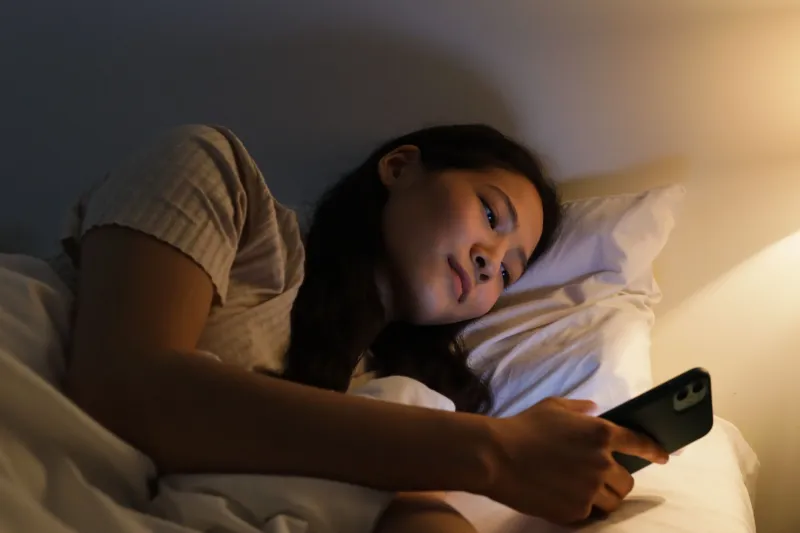
Ask any regular online casino player about their worst sessions and you'll hear a common thread: it started at a reasonable hour and ended somewhere they didn't plan to be. Not because they're reckless people, but because the platform they were using gave them zero environmental cues that it was time to stop.
In a physical casino, the morning light creeping under the doors, the shift change at the tables, even the change in background music — these are all subtle signals that time is passing and the world outside is moving on. Online, none of that exists. You're in a sealed environment designed to feel timeless.
This isn't a conspiracy theory. It's documented design. Casino UX teams specifically avoid clocks, minimize reminders of real-world time, and structure reward cycles to peak just as a player is thinking about stopping. Understanding this isn't about demonizing the industry — it's about knowing what you're actually up against.
Building Your Own Closing Time
The good news is that you can engineer friction back into your routine. You don't need willpower alone — you need systems. Here's what actually works for US players navigating the always-open landscape:
Set a hard session timer before you start. Most reputable US-facing platforms like BetMGM, Caesars Palace Online, and DraftKings Casino offer built-in session limits under their responsible gaming tools. Use them. Setting a one-hour or two-hour cap before you're emotionally invested in a session is vastly more effective than trying to quit mid-streak.
Create physical barriers. Log out of casino apps completely after each session. Don't save your password. Delete the app from your home screen and keep it in a folder. Every extra tap between you and the game is a micro-moment for your prefrontal cortex to weigh in.
Assign gambling its own time slot. Treat it like a gym session — something with a start time and an end time that lives in your calendar. "I play on Friday evenings from 7 to 9" is a fundamentally different psychological contract than "I play whenever I feel like it."
Use deposit limits and cooling-off periods. Every licensed US online casino is required to offer these tools. A 24-hour cooling-off period is essentially the digital equivalent of a casino locking its doors. It reintroduces the delay between impulse and action that the always-open model stripped away.
The Awareness Advantage
None of this means online casinos are bad or that enjoying them is a mistake. Millions of American players use these platforms responsibly and have a genuinely great time doing it. The edge goes to the players who understand the environment they're in — who recognize that the absence of closing time is a design feature, not a neutral fact.
Knowing what "always open" actually means for your brain is the first step toward making sure you're the one deciding when the night ends, not the algorithm.
At OnlineListCasino24, we're here around the clock — but that doesn't mean you have to be.